Contact Us


Water Jet Cutting
Common Materials Used in Water Jet Cutting
Water jet cutting is renowned for its versatility in processing a wide range of materials. The technology can handle both metal and non-metal materials with equal precision. Common materials processed include:
- Metals: Steel, Stainless Steel, Aluminum, Titanium
- Plastics: Acrylic, Polycarbonate, PVC
- Composites: Carbon Fiber, Fiberglass
- Natural Materials: Stone, Wood
The ability to cut such a diverse range of materials makes water jet cutting an invaluable solution across various industries.
 |
Water Jet Cutting Process
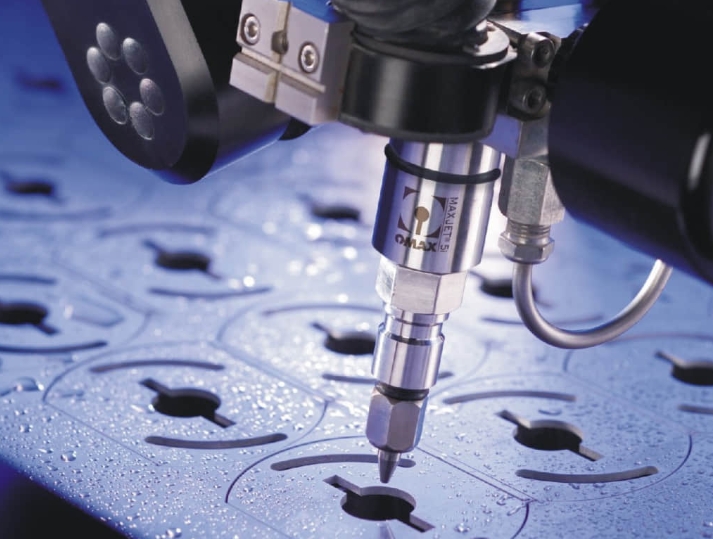
Water jet cutting utilizes a high-pressure stream of water mixed with an abrasive substance to cut through materials. The process involves:
- High-Pressure Water Generation: Water is pressurized up to 90,000 PSI
- Abrasive Introduction: Garnet or other abrasives are added to the water stream
- Precision Cutting: The abrasive water jet is directed through computer-controlled nozzles
- Material Removal: The high-velocity jet erodes material along the cutting path
This method produces clean cuts with minimal edge distortion and no heat-affected zone.
Applications of Water Jet Cutting
- Aerospace: Precision components for aircraft manufacturing
- Automotive: Interior and exterior trim parts
- Marine: Custom fittings and structural components
- Construction: Stone and metal fabrication
- Art & Architecture: Sculptures and decorative elements
- Energy: Components for renewable energy systems
- Defense: Specialized parts for military applications
- Electronics: Housing and structural components
Material Cost Considerations
Several factors influence the cost of water jet cutting services:
- Material Type: Harder materials may require longer cutting time
- Thickness: Thicker materials increase processing time
- Complexity: Intricate designs with tight tolerances may cost more
- Volume: Larger quantities typically reduce per-unit costs
Despite these variables, water jet cutting often proves cost-effective for complex parts that would require multiple processes with traditional methods.