Contact Us


Parts Surface Finishing Services
Hand Finishing, Clear Anodizing, Color Anodizing, Hard Anodizing, Bead blasting, Chemical Film, Polishing, Chorming, Heat treatment, Passivating, Laser engraving, Electrophoresis, Vacuum Metalizing, Powder Coated, Metal Plating, Silk-screen Printing
GET AN INSTANT QUOTE | PARTS FINISH
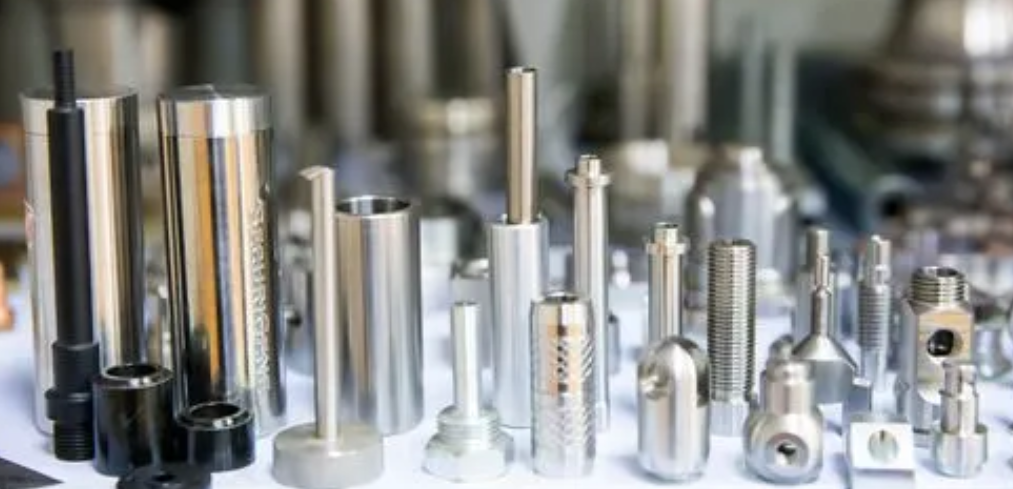
KROSINO Post-Processing For Your Parts
KROSINO IS EXPERT IN CNC MILLING | CNC TURNING | LASER CUTTING | SHEET METAL | WIRE EDM.
PARTS SURFACE FINISHING
KROSINO's post-processing is capable of providing the best product surface, including hand-finishing, sanding, sand blasting, polishing, painting, and printing. We also offer a wide array of special surface finishing, including laser etching, anodizing, powder coating, metal plating, vacuum metalizing, chromate, chemical finishing, passivating, heat treatments, etc.
KROSINO Parts Post Processing Capabilities
Whether it is CNC machining, sheet metal or other machining methods to get the workpieces, in order to gain an accurate appearance of your final product, the prototypes must undergo a rigorous post finishing process, which describes the final steps required before a product can be truly brought to life.
KROSINO provides an integrated parts surface finishing service to meet your diverse needs. With suppliers and our experienced in-house skills and advanced facilities, we try our best to ensure the color, texture, gloss, and surface finish of parts and exceed your expectations.

Hand Finishing
KROSINO focuses on every engineering detail and design specification. Post-finishing includes de-flashing, gluing, filling, modifying, adding inserts, pre-fitting, measuring, and assembling. Our team can also work with client-supplied components to finish and assemble as needed, including mating and assembling parts. We help reveal engineering hurdles not apparent in CAD design and offer solutions to overcome these challenges.
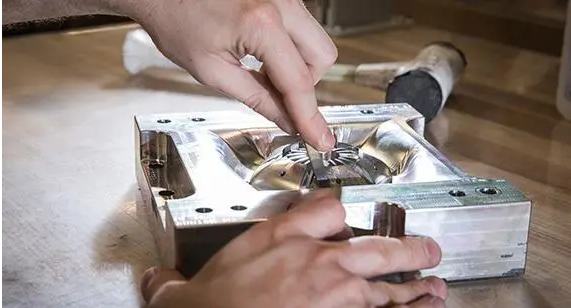
Laser Engraving
Laser engraving is the process of selectively removing microscopic layers of material, creating visible marks on the treated surface. Depending on the materials, the laser-material interactions can be different. On harder surfaces, the mechanism is primarily ablation, where the focused beam dislodges particles from the substrate. Engraving can achieve depths of 100um and beyond, whereas laser marking is typically shallower.
The choice of lasers is critically important for the quality of the mark. Short bursts of high-quality laser pulses are preferable, as they transfer large amounts of energy without causing significant heating and melting of the sample.

Polishing
Polishing is the process of creating a smooth and shiny surface by rubbing it or by applying a chemical treatment, leaving a clean surface with a significant specular reflection. In some materials, polishing can also reduce diffuse reflection to minimal values.
High polishing is used for a mirror finish on normal plastic, metal parts, and clear acrylic and polycarbonate parts, achieving a precise uniform flat surface and professional-grade gloss, or enhancing the optical clarity of clear parts.
Mirror polishing is often performed on materials such as stainless steel and Al7075, while softer metals like Al6061 risk having their surface deformed when sanding down. The added benefit of mirror polishing is its resistance to corrosion due to its highly smooth surface.
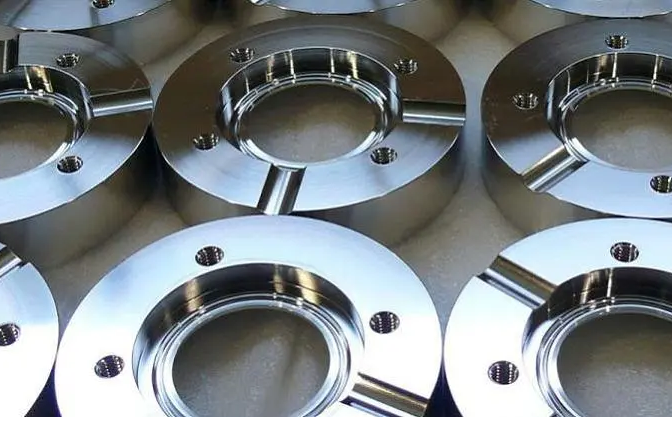
Machined Surface
The raw finish left on a part that has been manufactured using CNC machining is called 'as machined'. Machined parts will have tool marks that follow the path of the cutting tool. The machined finish is to make a smooth surface, created by a machine without polishing work, only needing a little handwork to clear the burr, allowing the part to be finished and delivered quickly. The average surface roughness on an 'as machined' part is Ra 3.2 (3.2 μm). Additional finishing cuts can be performed to reduce the surface roughness further but this will increase the part cost. The standard machined surface roughness is Ra 3.2-1.6 μm; the smooth machined surface roughness is Ra 1.6-0.8 μm; the super-finished surface roughness is Ra 0.8-0.2 μm.

Heat Treatment
Heat treatment involves using heating or chilling to extreme temperatures to achieve desired results such as hardening or softening of a material. Common methods include annealing, hardening, quenching, and stress relieving, each producing different results.
Heat treating can improve wear resistance by hardening the material. Metals like stainless steel and Al7075 can be surface-hardened, while softer metals like Al6061 risk deformation during sanding. Mirror polishing enhances corrosion resistance due to its highly smooth surface.
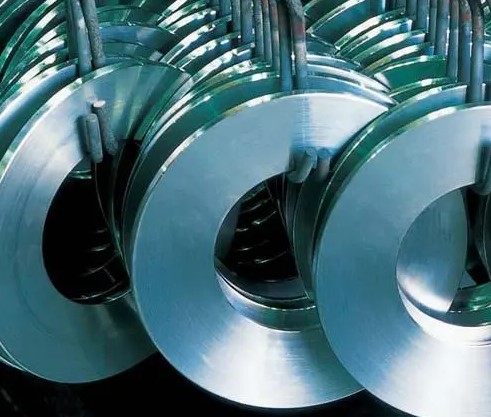
Bead Blasting
Bead blasting is a reductive finish where a pressurized gun fires a stream of abrasive glass beads at the part to remove a thin layer of the surface. The process creates a consistent matte/satin surface finish and is often used to remove tooling marks or imperfections.
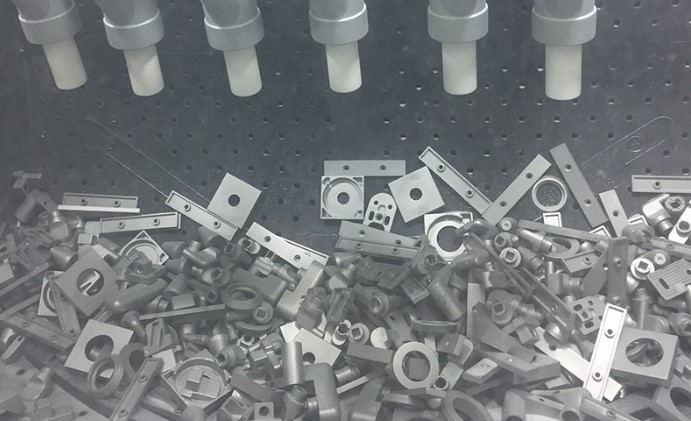
HARD ANODIZING & STANDARD COLOR ANODIZING
Hard anodizing and standard color anodizing are both types of anodizing processes used to enhance the surface properties of metals, particularly aluminum. However, they differ in several key aspects, including thickness, hardness, color, and applications.
Here’s a comparison of the two:
1. Thickness of the Oxide Layer
Hard Anodizing:
Produces a much thicker oxide layer, typically ranging from 25 to 150 microns (or even thicker in specialized applications).
The thicker layer provides enhanced durability and wear resistance.
Standard Color Anodizing:
Results in a thinner oxide layer, usually between 5 to 25 microns.
The thinner layer is sufficient for decorative or light-duty functional purposes.
2. Hardness and Durability
Hard Anodizing:
The oxide layer is significantly harder and more abrasion-resistant.
It is often used in industrial applications where high wear resistance is required, such as in aerospace, automotive, and machinery components.
Standard Color Anodizing:
The oxide layer is softer and less durable compared to hard anodizing.
It is primarily used for aesthetic purposes or light-duty functional applications.
3. Color and Appearance
Hard Anodizing:
Typically results in a matte or dark gray/black appearance.
The color is usually not the primary focus, as the process prioritizes durability over aesthetics.
Standard Color Anodizing:
Can be dyed in a variety of colors (e.g., silver, gold, black, or custom colors).
The focus is often on achieving a specific visual appeal while providing some level of corrosion resistance.
4. Applications
Hard Anodizing:
Used in high-performance applications such as engine components, hydraulic pistons, military equipment, and industrial tools.
Ideal for parts that require high wear resistance, low friction, and resistance to corrosion.
Standard Color Anodizing:
Commonly used for consumer products, architectural elements, and decorative finishes.
Examples include aluminum frames, electronics housings, and household appliances.
5. Process Conditions
Hard Anodizing:
Requires lower temperatures (typically near freezing) and higher voltages.
Often uses sulfuric acid with additives to achieve the desired thickness and hardness.
Standard Color Anodizing:
Operates at slightly higher temperatures and lower voltages compared to hard anodizing.
Uses sulfuric acid to create a porous oxide layer that can be dyed.
Hard Anodizing focuses on durability, thickness, and functional performance, while Standard Color Anodizing prioritizes aesthetic appeal and basic corrosion resistance.
The choice between the two depends on the specific requirements of the application, such as mechanical stress, environmental conditions, and visual needs.
Screen Printing & Etching
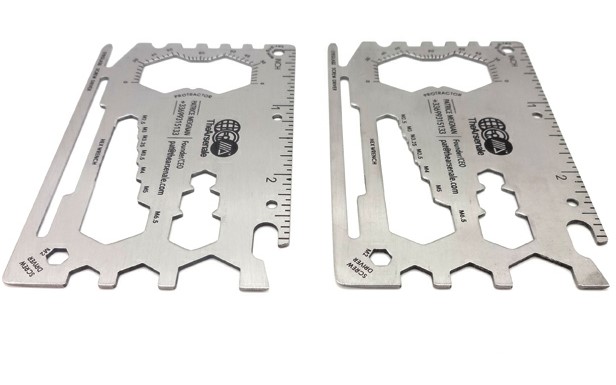
Silk-Screen printing uses a screen as a plate base, with photosensitive plates to create text or images. The process involves applying ink through the mesh onto the substrate. Etching is an intaglio printmaking process where lines or areas are incised using acid into a metal plate to hold ink.
Etching, also known as photochemical etching, involves removing protective film from specific areas through photolithography, allowing chemical solution to corrode the metal, creating concave and convex surfaces. In etching, the plate can be made of iron, copper, or zinc. To prepare the plate for etching, it is first polished to remove all scratches and imperfections from the surface.
Painting & Powder Coating
KROSINO uses Panton Matching System and RAL Classic System to match custom colors or paint samples. We can also do two-color or multi-color painting for a more complex appearance. We offer various finishes: matte, flat, semi-gloss, glossy, or satin.
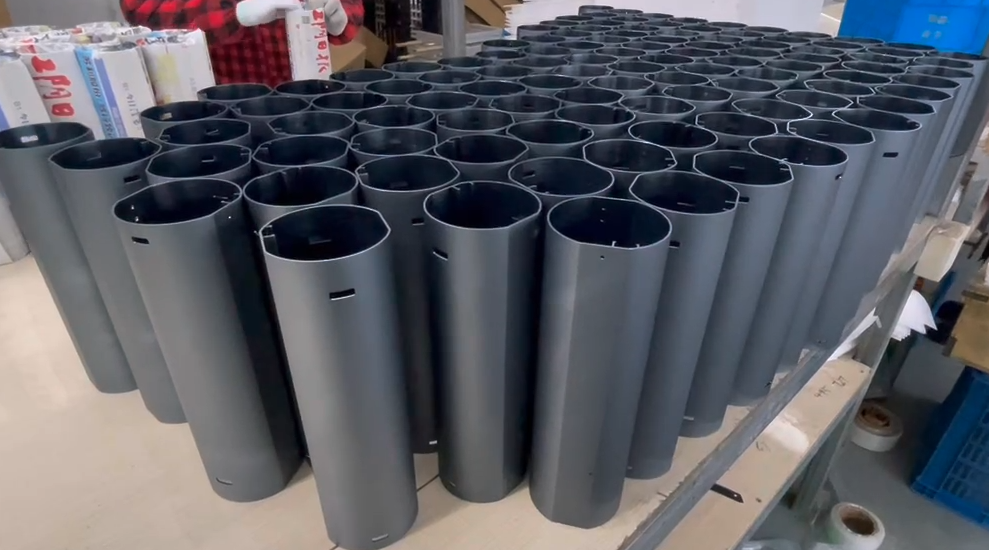
Powder coating adds a thin layer of protective polymer on the surface of the part. It uses corona discharge to make powder coating adhere to the workpiece, creating a strong, wear-resistant finish. The typical thickness varies from approximately 50 μm up to 150 μm.
Metal Plating
Plating is a process of coating a metal part with a thin layer of another metal or alloy to protect against corrosion and oxidation, or to change its cosmetic appearance. Common plating metals include Tin, Nickel, Zinc (galvanizing), and Chrome.
Common plating types:
Gold plating, Silver plating, Copper plating, Rhodium plating, Chrome plating, Zinc plating, Zinc-nickel plating, Tin plating.
Vacuum Metalizing
Vacuum metalizing, or vacuum metallization, coats a non-metallic substrate with a metallic layer through physical vapor deposition (PVD). It involves evaporating metal (like aluminum) onto the substrate in a high-vacuum chamber at approximately 1500°C.
The lack of pressure in the vacuum chamber lowers the boiling point of the metal, causing it to vaporize and adhere to the substrate's surface, producing a metallic coating. Aluminum is commonly used for reflective coatings, achieving 90% reflectivity, and is used in lighting reflectors. Industrial, commercial, and automotive lighting reflectors all use aluminum.
GET AN INSTANT QUOTE | PARTS FINISHStart Whatsapp Chat Start Teams Chat